The Story
How this tradition took shape
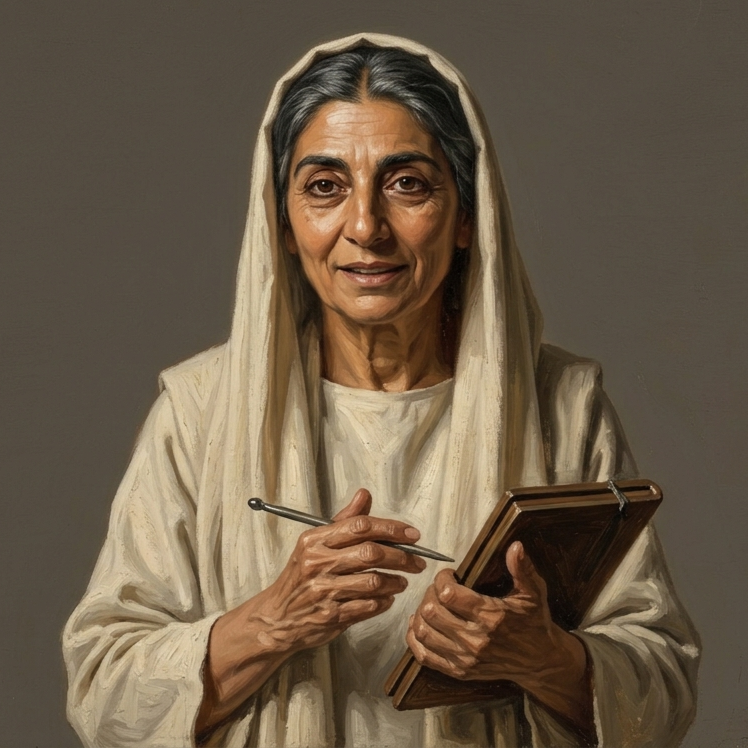
Synthesized voice — not a recording.
This circle's story runs from 382 to 420 CE, in RomeRomeThe Roman capital, in Latin Roma. Its site lies in modern Rome, Italy. Jerome reached it in 382, and Marcella's household stood here.Place · pleiades.stoa.org and in BethlehemBethlehemAn ancient town whose site is today Beit Lahm, in the West Bank. Paula settled here, and Jerome worked here.Place · pleiades.stoa.org. In 382 a scholar named JeromeJeromeA Christian scholar who lived in Rome, then Bethlehem, and died in 420. His letters carry nearly everything we know of this circle.Person reached Rome as secretary and scriptural adviser to Pope DamasusDamasusBishop of Rome from 366 to 384. He gave Jerome work as secretary and adviser on scripture. He died in December 384.Person. There he met a household that already existed. The widow MarcellaMarcellaA widow of Rome who died in 410. Her Aventine house was already a place of fasting and scripture study when Jerome arrived.Person had made her house on the Aventine hillAventine hillOne of the seven hills of Rome, called Monte Aventino today. Marcella's house stood here.Place · pleiades.stoa.org a place of fasting and scripture study. Historians think other women had joined her before Jerome came. He brought the scholar's training in texts that the household lacked.
The women of the circle gave up wealth, marriage prospects, and rank on purpose, as devotion to Christ. For them, this giving up was itself how a Christian life took shape. Jerome says Marcella turned down a rich suitor and chose a plain life.
In 384 BlaesillaBlaesillaPaula's daughter. What we know of her comes from Jerome's letters.Person, the daughter of the widow PaulaPaulaA Roman widow who founded and led the women's community at Bethlehem. She died there in 404. Her granddaughter, Paula the younger, shares her name.Person, died in Rome at about twenty. She had been widowed young and had taken up a severe asceticasceticA strict life of self-denial, lived as devotion to Christ. In this circle it included fasting and giving up wealth.Term discipline only months before. Jerome reports the funeral crowd saying that fasting had killed her. He says they asked why the detestable monks were not stoned or thrown into the Tiber. That December Pope Damasus died, and the protection he had given Jerome ended with him. In August 385 Jerome sailed east. From the ship he wrote that all Rome had praised him before he knew Paula's house, and that now he was called infamous.
Paula followed him east and settled in Bethlehem. She founded a community of women there and led it until she died in 404. Jerome writes that her fortune paid for houses for monks and for virgins, and for a hostel for travelers. Jerome was only a presbyter, under the bishop of Jerusalem. After Paula's death her daughter EustochiumEustochiumPaula's daughter, vowed to a virgin's life from her youth. She led the Bethlehem women after her mother died.Person led the women.
Jerome held that the Hebrew text of scripture stood closest to what God said, closer than the Greek version the church had long used. At Bethlehem he spent years turning the Old Testament into Latin from the Hebrew, book by book. Nearly every book came with a short, fighting preface that defended his choices against critics. By Jerome's account, Paula's fortune also paid for his Hebrew teachers.
Around 403, in the North African town of OeaOeaOea began as a Phoenician town. Its site is now Tripoli, in Libya. The uproar over Jonah took place here.Place · pleiades.stoa.org, a bishop read the prophet Jonah aloud from the new translation. The familiar version said a gourd had shaded the prophet. The new one said ivy. The congregation erupted. AugustineAugustineBishop of Hippo, 354 to 430. He wrote to Jerome for about twenty-five years, arguing against giving up the old Greek text.Person, bishop of HippoHippo RegiusThe Phoenicians founded this colony. Its site is now Annaba, in Algeria. Augustine was bishop here until he died in 430.Place · pleiades.stoa.org, told Jerome what happened. The bishop of Oea, close to losing his people, asked the town's Jewish residents about the Hebrew. They backed the old word, Augustine reports, and the bishop corrected the reading. Augustine feared that setting aside the old Greek text would put the church's unity at risk. He wrote that the story made him think Jerome might sometimes be mistaken. Jerome answered point by point. Neither man conceded, and their courteous letters kept crossing for years.
Marcella stayed in Rome. Jerome wrote after her death that, once he left, people in Rome brought their disputes about scripture to her to settle. Many men put hard questions to her, he adds, and priests were sometimes among them. She gave her answers as if they came from him or someone else. In 410 AlaricAlaricThe Gothic leader whose forces took Rome in 410.Person's Goths took Rome. As Jerome heard it, soldiers came to Marcella's house demanding gold. They did not believe her when she pointed to her plain dress, and they beat her. She died a few days later.
In 416 a quarrel over the teaching of PelagiusPelagiusHe gave his name to the Pelagian controversy, a fight over grace, free will, and whether people can live without sin.Person reached the Bethlehem monasteries as an attack. Pope InnocentInnocentBishop of Rome in 416. His letters about the attack on Bethlehem survive.Person wrote that Eustochium and her young niece, also named Paula, had reported murders and fires to him. He added that they would not name the man behind it. Jerome wrote that the Bethlehem house had lost its earthly wealth but was still filled with spiritual riches.
Jerome died in 420, by the accepted count. Eustochium died in 418, 419, or 420. Years later Augustine called Jerome a most learned man who had translated the scriptures from the Hebrew. Even the Jews, he granted, called the work faithful. Still, he said, the churches of Christ judged that no one should be preferred to the authority of the SeptuagintSeptuagintThe Greek version of the Old Testament that the church had long used. Augustine argued it should keep its authority.Term translators.