II. The Imperial Church312-451 CE

c. 325-394 CE · Cappadocia / Anatolia

The Cappadocian Churches

Cappadocian Pastoral-Monastic and Trinitarian Tradition

The Nicene-confessing churches of Cappadocia and Pontus lasted from about 325 to 394 CE. One family and one friendship stood at their center. They were Basil of Caesarea; his sister, Macrina; his brother, Gregory of Nyssa; and Basil's friend, Gregory of Nazianzus. Basil, Gregory of Nyssa, and Gregory of Nazianzus argued the century's hardest question. Is the Son fully God, the same way the Father is? Is the Spirit God in that same way, too? Macrina turned the family estate into an ascetic household of her own. The council that later censured them made a claim about ascetic radicals in the region. It said the radicals had already broken up households and urged enslaved people to leave their owners. Basil did not condemn that impulse. Instead, he gave it a rule to follow. It came with a vow of obedience, and a household that welcomed guests. A famine struck the region around 368. Basil, still a priest at the time, preached against the local landowners who hoarded grain, and named them. Once he became bishop, he built a complex outside Caesarea. It fed the poor, housed travelers, treated the sick, and sheltered people with leprosy. Places like it already existed elsewhere, so it was not the first. What made it unusual was its size, and how openly it stood inside the city. This Christian tradition buried a martyr too. Eupsychius of Caesarea was executed under Julian in 362. Under Valens, Gregory of Nyssa was deposed and sent into exile. The charge: mishandling money. His brother Basil called it trumped up, but no record survives from the side that brought the charge. Gregory returned two years later, once political pressure on Nicene bishops eased. Then, in 381, this Nicene minority finally won the empire's favor.

Listen to the story

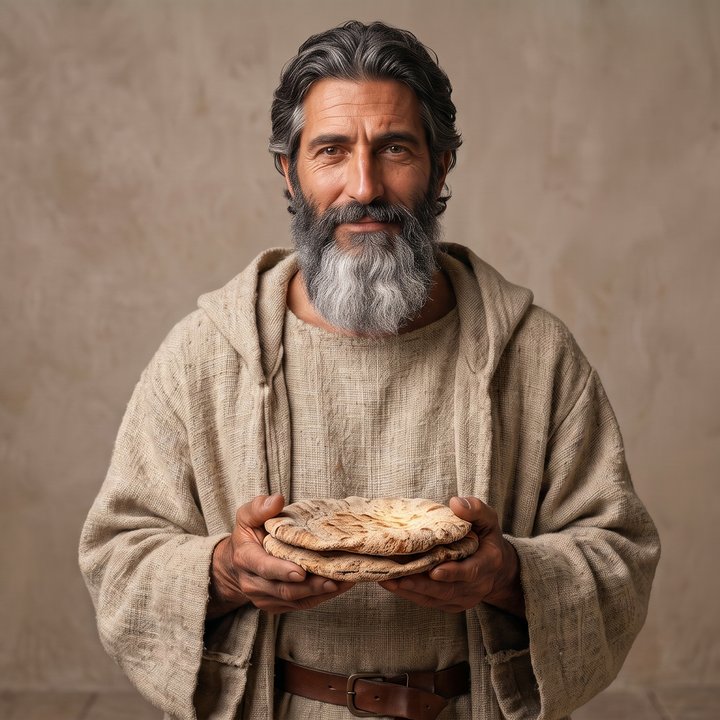
Chilo: a grey-bearded man in a plain hooded wool robe with a leather belt, holding a stack of flatbread in both hands, painted against a warm neutral ground.

Chilo

The Story

How this tradition took shape

Synthesized voice — not a recording.

From about 325 to 394, churches in CappadociaCappadociaA region whose chief town was Caesarea, modern Kayseri in Turkey.Place · pleiades.stoa.org and PontusPontusThis province is in Turkey today. It got a new name for Helena after she died. She was Constantine's mother. Basil's family had a home at Annisa, in Pontus.Place · pleiades.stoa.org held to the faith of the Council of NicaeaNicaeaA Greek city of northwestern Anatolia, now İznik in Turkey. A council of bishops met here in 325.Place · pleiades.stoa.org. Nearly everything that survives from them was written by three men. Two were brothers, Basil of CaesareaBasil of CaesareaBorn about 329 or 330, he was bishop of Caesarea from 370. The year of his death is disputed, between 377 and 379.Person and Gregory of NyssaGregory of NyssaBasil's younger brother, born about 335. He was bishop of Nyssa from about 372 and the most speculative thinker of the three.Person. The third, Gregory of NazianzusGregory of NazianzusBorn about 329 or 330, died about 390. Basil's friend from student days, he was briefly bishop of Constantinople.Person, was Basil's friend from student days.

These churches held that the Son is fully what the Father is, and that the Holy Spirit is no lesser presence trailing behind them. Two Greek words carried the idea. OusiaOusiaGreek for what God is. These churches used it to say that God is one being.Term meant what God is, one being. HypostasisHypostasisGreek for who God is. Father, Son and Holy Spirit are each a real someone.Term meant who God is. Father, Son and Holy Spirit were each a real someone, none a costume and none a creature. Their word for reverence, eusebeiaeusebeiaGreek for reverence. It meant careful words about God. It also meant right living, including the just use of money and power.Term, covered exact words about God. It also covered right living, with money and power included.

About 368, drought struck CaesareaCaesareaThe chief town of Cappadocia, modern Kayseri in Turkey. Basil was bishop here from 370, and his poorhouse stood outside its walls.Place · pleiades.stoa.org and its countryside. Landowners with full storehouses held back their grain and waited for higher prices. Basil, then a priest, preached against them. He charged that to hoard a neighbor's bread while the neighbor starves is theft, whatever the law calls it. Granaries opened, and relief was organized for as long as the crisis lasted.

Basil became bishop of Caesarea in 370. Later he built a poorhouse outside the city walls. It held a guest-house, an infirmary and a house for people with leprosy, and ascetics served there as nurses. Gregory of Nazianzus called it the new citythe new cityGregory of Nazianzus gave Basil's poorhouse this name after Basil died. The later name Basileias was not used in this time.Term.

For most of this period the court backed a rival creed. It held the Son to be merely like the Father. In 371 or 372 the emperor ValensValensEmperor in the East from 364 to 378. He split Cappadocia into two provinces in 372.Person sent his prefectprefectModestus held this office as prefect of the East under the emperor Valens. Valens sent him to Caesarea before his own visit there.Term ModestusModestusPrefect of the East under Valens, from about 369 or 370 to 377. Valens sent him to bring Basil into line.Person to bring Basil into line. As Basil's friend Gregory told it, Modestus threatened him with confiscation, exile, torture and death. Basil is remembered answering that a man who owns nothing has nothing to confiscate.

One flashpoint in the fight over the Holy Spirit was a prayer. About 375, Basil prayed with his people and gave glorygave gloryGiving glory to God in worship is called a doxology. Basil argued that the words of worship carry what the church believes.Term to the Father in two forms. One was with the Son, together with the Holy Spirit, and the other was through the Son, in the Holy Spirit. Basil reports that some who heard him called his words new and contradictory. To glorify the Spirit together with the Father and the Son placed the Spirit on the Creator's side of the line.

AmphilochiusAmphilochiusA bishop of Iconium, born about 340 or 345. He was a cousin of Gregory of Nazianzus. Basil wrote On the Holy Spirit for him.Person of IconiumIconiumA city in Lycaonia. It is now Konya, in Turkey. Amphilochius was its bishop.Place · pleiades.stoa.org, a younger bishop and friend, asked Basil to answer in writing, and the answer became a book, On the Holy SpiritOn the Holy SpiritBasil's book, written at the request of Amphilochius. It answers those who attacked his prayer.Term. Basil argued that the words of worship carry what the church believes. In his own writings, though, he never plainly called the Spirit God. His allies argued about this at the time, with some wanting the plain word and others defending his restraint.

MacrinaMacrinaBorn about 327 and died in 379. Her own words do not survive. She reaches us only through her brother Gregory of Nyssa's writing.Person was the family's eldest child, and her circle called her the Teacher. She led a community of asceticasceticFrom the Greek word for an athlete's training. It meant fasting, night vigils, poverty and obedience.Term women on the family estate at Annisa. In 379 her brother Gregory of Nyssa found her dying. He later shaped their last talk into a dialogue on the soul and the resurrection. Scholars disagree on how much of it is hers.

Gregory of Nazianzus carried the argument to ConstantinopleConstantinopleThe capital of the Roman Empire in the East. It was founded in 330 by Constantine. Today it is Istanbul, in Turkey.Place · pleiades.stoa.org. In 379 he came to lead the small Nicene church there. A rival church, long favored by the court, still held the city's great churches. So his people met in a private house he named Anastasia, which means resurrection. There he preached the five Theological OrationsTheological OrationsFive talks that Gregory of Nazianzus gave in Constantinople. In them he sets out the Trinity and defends it.Term. By his own account, a mob attacked the gathering one Easter.

The tide turned under a new emperor, TheodosiusTheodosiusThe emperor who established Nicene Christianity in 380 and 381.Person, who favored the Nicene faith. In 381 the Council of ConstantinopleCouncil of ConstantinopleBishops met in Constantinople in 381 and kept the Nicene faith. Gregory of Nazianzus led them for a short time, then resigned.Council met. Gregory of Nazianzus was made bishop of the city and given the council's presiding chair, but he did not hold it long. He resigned before the work was done. By his own telling, his election was disputed and he was worn out.

The council ratified the faith of Nicaea. Its creed says the Holy Spirit is worshipped and glorified together with the Father and the Son. The bishops wrote the faith the way these churches had already been singing it. Eastern Orthodox churches still confess this creed. Roman Catholics honor Basil and Gregory of Nazianzus as teachers of the whole church.

People

The people behind this account

Basil, bishop of Caesarea

Basil helped the hungry before he was ever a bishop. As a young priest, he preached against local landowners who hoarded grain. That preaching led to real relief for the poor. Once he became bishop, he built something lasting. Outside Caesarea's own walls, he built a poorhouse, a hospital, and a workhouse together. His own monks ran it. He also gave the region's monks a written rule to live by. And he defended the Holy Spirit's own honor, against a hostile court - choosing his own words with great care, even then.

Gregory, bishop of Nazianzus, called the Theologian

Gregory of Nazianzus wanted a quiet life of study and prayer. His closest friend, Basil, had other plans. Basil made him a bishop instead, at a dusty crossroads. Gregory never fully forgave him for it - in letters, and later in verse. He still carried the Trinity argument into a hostile Constantinople. He preached there from a rented house, until the tide finally turned. He was then given the bishopric there himself. He resigned it almost at once, worn out by the whole fight.

Gregory, bishop of Nyssa

Gregory of Nyssa was the youngest of the three brothers. He was also the most speculative thinker among them. Basil's own letters complain that his brother had no head for politics. When Gregory of Nyssa found his sister Macrina dying, he did something striking. He turned their last talk into a full written dialogue, on the soul and life after death. He was later removed from his post and sent into exile, by a hostile emperor. He came home once the pressure eased. He then finished a reply to a rival that Basil had left unfinished at his own death.

Macrina, called the Teacher (hē didaskalos)

Macrina was the eldest of the family. She turned the household estate at Annisa into a community of ascetic women. When her brother Gregory of Nyssa found her dying, she was not lying on a bed. She lay on bare planks, on the ground, with no possessions of her own around her. She spent her last hours teaching him, about the soul and the resurrection. She also rebuked his grief for their brother Basil.

Documented stories

Stories worth telling in full

Forty Soldiers on a Frozen Lake

About 320, in one of the last persecutions

Tradition tells of forty soldiers at Sebaste made to stand all night on a frozen lake. A warm bath waits on the shore for anyone who gives up the faith. One man breaks, and a guard takes his place.

Read the full account

Synthesized voice — not a recording.

It was around the year 320, in one of the last persecutions. At Sebaste in Lesser Armenia, forty soldiers were condemned for being Christians.

As our church remembers it, they were stripped and made to stand through a winter night on a frozen lake. A warm bath steamed on the shore. It was offered to any man who would deny the faith and step out of the cold.

The tradition says one of the forty broke before the night ended and went to the warm water. It says a guard set to watch them was moved by what he saw. He took off his own clothes and joined the rest on the ice. He confessed the faith the other man had just abandoned, so the martyrs still numbered forty. All of them died.

Basil and Gregory of NyssaGregory of NyssaBasil's younger brother, born about 335. He was bishop of Nyssa from about 372 and the most speculative thinker of the three.Person both preached on the feast of the Forty. Their mother, Emmelia, is credited with gaining relics of the Forty and enshrining them in the family's estate chapel at Annisa.

One Soul in Two Bodies

Their school years, most likely at Athens. Gregory tells it after Basil dies.

Two students, most likely at Athens, share lodging, books and a single aim. Gregory later calls their friendship one soul in two bodies.

Read the full account

Synthesized voice — not a recording.

Basil and Gregory of NazianzusGregory of NazianzusBorn about 329 or 330, died about 390. Basil's friend from student days, he was briefly bishop of Constantinople.Person met as students, most likely at Athens. Both had gone there for the fullest education their world offered.

Gregory's memory of Athens comes from two works. One is the great funeral speech he gave for Basil, years afterward. The other is his long poem about his life, written later still. He wrote both after the friendship had met real trouble, the wound of Sasima among it. That trouble had not been simply resolved before Basil died. When he rose to praise his dead friend, Gregory chose to remember Athens first.

What grew between them, Gregory said, was one soul lodged in two bodies. They shared lodging, books and purpose. Worldly advancement was not their aim, he says, and they studied together toward one goal, the fullest possible turn toward God.

When their studies ended, both men went home to CappadociaCappadociaA region whose chief town was Caesarea, modern Kayseri in Turkey.Place · pleiades.stoa.org.

An Emperor Bars Christians From Teaching the Classics

361 to 363, while Julian is emperor

Julian rules that Christian teachers must believe in the gods of Homer or stop teaching Homer. Julian dies in 363. Gregory of Nazianzus then writes two angry speeches against him.

Read the full account

Synthesized voice — not a recording.

Julian spent part of his boyhood at Macellum, an estate in CappadociaCappadociaA region whose chief town was Caesarea, modern Kayseri in Turkey.Place · pleiades.stoa.org. His family had been purged, and he was kept there under Christian tutors he did not choose. As a grown man he rejected that schooling entirely. He turned back to the old gods and to the classical culture.

Julian ruled as emperor from 361 to 363. He issued a school law. Separately, he issued a second, narrower ruling aimed at Christian teachers. Those who taught Homer and the old poets, he ruled, must believe in the gods those texts honored, or stop teaching them. His reasoning survives in his own words. A Christian teacher who explained stories he said he did not believe was dishonest, Julian argued, at the very root of his craft.

The measure struck at the Greek learning, our paideia, which our leaders had spent their lives mastering. They had defended it as compatible with their faith. Julian is also remembered for taking measures against CaesareaCaesareaThe chief town of Cappadocia, modern Kayseri in Turkey. Basil was bishop here from 370, and his poorhouse stood outside its walls.Place · pleiades.stoa.org itself, in the region of his own schooling, because of its Christian loyalties.

Julian died on campaign in Persia in 363. The fury of Gregory of NazianzusGregory of NazianzusBorn about 329 or 330, died about 390. Basil's friend from student days, he was briefly bishop of Constantinople.Person outlived him. Gregory wrote a pair of speeches against the dead emperor, ferocious even for attacks of that kind. They refused Julian any of the honor a dead emperor might expect.

Basil Preaches Against the Grain-Hoarders

About 368 or 369, before Basil becomes bishop

In a drought, Basil, then a priest, tells landowners that to hoard a neighbor's bread is theft, whatever the law calls it. Granaries open.

Read the full account

Synthesized voice — not a recording.

The harvest failed. Drought had struck CaesareaCaesareaThe chief town of Cappadocia, modern Kayseri in Turkey. Basil was bishop here from 370, and his poorhouse stood outside its walls.Place · pleiades.stoa.org and the country around it in the years before Basil became bishop, and grain grew scarce and dear.

Those with full storehouses held their grain back, waiting for the price to climb higher before they would sell.

Basil, a priest then, preached against them and did not soften the charge. To hoard a neighbor's bread while that neighbor starves is theft, he taught, whatever the law calls it. He pointed to the man in the Gospel parable who tore down his barns to build bigger ones. That man learned the lesson too late.

Basil preached against lending at interest for the same reason. To profit from another person's desperate need was the same kind of wrong.

Then the granaries opened. Relief was organized for the hungry, paid for and handed out for as long as the crisis lasted.

A Prefect Threatens a Bishop

371 or 372, under the emperor Valens

In Gregory's telling, the prefect Modestus threatens Basil with the loss of his goods, with exile, torture and death. Basil answers, he says, that a man who owns nothing has nothing to take.

Read the full account

Synthesized voice — not a recording.

As Gregory of NazianzusGregory of NazianzusBorn about 329 or 330, died about 390. Basil's friend from student days, he was briefly bishop of Constantinople.Person told it in his funeral speech for Basil, ModestusModestusPrefect of the East under Valens, from about 369 or 370 to 377. Valens sent him to bring Basil into line.Person threatened the bishop with confiscation, exile, torture and death. Modestus was the praetorian prefectprefectModestus held this office as prefect of the East under the emperor Valens. Valens sent him to Caesarea before his own visit there.Term of the emperor ValensValensEmperor in the East from 364 to 378. He split Cappadocia into two provinces in 372.Person, and the emperor had sent him to bring Basil of CaesareaBasil of CaesareaBorn about 329 or 330, he was bishop of Caesarea from 370. The year of his death is disputed, between 377 and 379.Person into line.

This was in 371 and 372. Valens backed a different creed from Basil's. In those same years he split CappadociaCappadociaA region whose chief town was Caesarea, modern Kayseri in Turkey.Place · pleiades.stoa.org into two provinces, with real consequences for the churches. The prefect came ahead of the emperor's own visit.

Basil replied, the story goes, that a man who owns nothing has nothing to confiscate. No place is exile, he said, to one who counts the whole earth as God's. A man already given over to God in this life has nothing left that death can take.

The prefect, astonished, is said to have reported that no one had ever spoken to him that way. Basil is remembered replying that perhaps the prefect had never yet met a bishop.

The next Epiphany, Valens came to CaesareaCaesareaThe chief town of Cappadocia, modern Kayseri in Turkey. Basil was bishop here from 370, and his poorhouse stood outside its walls.Place · pleiades.stoa.org himself. Gregory says he found the church crowded to its doors for the feast. The singing filled the whole building like the sea, and Basil presided in full order, unafraid. The emperor was shaken by what he saw, Gregory says.

According to Gregory, a decree of exile was later signed. It was never carried out, he says, because the emperor's son fell ill. Basil was not removed.

Basil Makes His Close Friend a Bishop of a Dusty Crossroads

372, after Cappadocia is divided into two provinces

In a fight with a rival bishop, Basil makes his close friend Gregory bishop of Sasima, a dusty crossroads. In Gregory's telling, it is a wound that stays with the friendship.

Read the full account

Synthesized voice — not a recording.

Sasima was a small posting at a dusty crossroads, with little to recommend it.

In 372 CappadociaCappadociaA region whose chief town was Caesarea, modern Kayseri in Turkey.Place · pleiades.stoa.org was divided into two provinces. A rival bishop claimed authority over the new province's land. Basil moved to secure his authority as metropolitan, the chief bishop of the province. He created new sees and consecrated allies to hold them. Sasima was one, and Basil named his close friend, Gregory of NazianzusGregory of NazianzusBorn about 329 or 330, died about 390. Basil's friend from student days, he was briefly bishop of Constantinople.Person, to it.

Gregory felt the appointment as a wound. Gregory's bitter letters and poems tell it, and so does the long poem about his life that he wrote years later. No record from Basil's side survives.

Gregory had been pressed into an office he had not sought. He wrote of the place with open contempt, as a waystation without a people or a spirit of its own. As Gregory understood it, he was sent there more for Basil's need in the fight than for Gregory's own good.

Gregory in effect refused the post. He spent little time at Sasima. He withdrew instead to help his aging father, who was then bishop of Nazianzus.

A Prayer That Brought Charges of New Words

About 375, under the emperor Valens

Praying with his people, Basil gives glory to the Father in two forms. Basil reports that some who hear him call his words new and contradictory. His answer becomes the book On the Holy Spirit.

Read the full account

Synthesized voice — not a recording.

Basil, bishop of CaesareaCaesareaThe chief town of Cappadocia, modern Kayseri in Turkey. Basil was bishop here from 370, and his poorhouse stood outside its walls.Place · pleiades.stoa.org, prayed with his people in years when the imperial court still pressed its creed on the churches. He gave glorygave gloryGiving glory to God in worship is called a doxology. Basil argued that the words of worship carry what the church believes.Term in two forms. One was to the Father with the Son, together with the Holy Spirit. The other was to the Father through the Son in the Spirit.

Some who heard it objected. His words were new, they said, and contradicted each other. The difference lay in a few small words, and everyone understood that it mattered. To glorify the Spirit together with the Father and the Son places the Spirit on the Creator's side of the line.

His younger friend AmphilochiusAmphilochiusA bishop of Iconium, born about 340 or 345. He was a cousin of Gregory of Nazianzus. Basil wrote On the Holy Spirit for him.Person, bishop of IconiumIconiumA city in Lycaonia. It is now Konya, in Turkey. Amphilochius was its bishop.Place · pleiades.stoa.org, asked Basil to set the whole argument down. The answer became a book. Basil examined the church's giving of glory word by word. Not everything the church holds came to it in writing, he argued. The prayer under attack, he said, had come down to us in that unwritten way.

Pressed to declare in one bare sentence that the Spirit is God, Basil measured his words. He said it in the church's own way, through worship, through the Spirit's rank, and through the Name spoken over the baptized. More urgent voices wanted the plain word spoken. His friends defended his restraint.

Years later, when the bishops gathered again, they wrote the faith the way we had already been singing it. Their creed says the Spirit is worshipped and glorified together with the Father and the Son.

A Bishop Deposed on Money Charges

About 376 to 378, under Valens

Gregory of Nyssa is removed from his post on charges of mismanaging money. He spends about two years in exile. Basil calls the charges trumped up.

Read the full account

Synthesized voice — not a recording.

Under the emperor ValensValensEmperor in the East from 364 to 378. He split Cappadocia into two provinces in 372.Person, Gregory of NyssaGregory of NyssaBasil's younger brother, born about 335. He was bishop of Nyssa from about 372 and the most speculative thinker of the three.Person was deposed and driven into exile. He was still a fairly junior bishop, and his see was a minor one. He was charged with mishandling money.

His brother Basil wrote about the affair in letters defending him. In Basil's telling, the charges were trumped up. Hostile bishops of the court's party, who held the Son merely like the Father, had arranged them, he wrote. They used a synod packed against his brother, with no true hearing of the case.

Gregory spent about two years away from his see. He came back only when the political weather changed and Valens eased his pressure on the Nicene bishops of the region. A short note by Gregory himself survives. It records something of his joy at coming back.

Macrina Teaches Her Brother From the Ground Where She Is Dying

379, Macrina's death, per her brother's own account

Gregory of Nyssa finds his sister Macrina dying on a plank set on the ground. He later shapes their last talk into a dialogue on the soul and the resurrection.

Read the full account

Synthesized voice — not a recording.

In 379, Gregory of NyssaGregory of NyssaBasil's younger brother, born about 335. He was bishop of Nyssa from about 372 and the most speculative thinker of the three.Person traveled to see his sister MacrinaMacrinaBorn about 327 and died in 379. Her own words do not survive. She reaches us only through her brother Gregory of Nyssa's writing.Person. She was the eldest of the family's children, and we called her simply the Teacher. He found her already dying.

She lay on a plank set on the ground instead of a couch. She was wrapped in a rough garment, with no possessions around her.

As she was dying, brother and sister talked about the soul, about the resurrection, and about whether death should be feared. Everything we have of this comes through Gregory's own pen. He wrote a Life of Macrina soon after. He also shaped their last talk into a full dialogue, On the Soul and Resurrection. He staged it at her deathbed, in the manner of Plato's account of the last hours of Socrates. How much of her part there is her own, and how much is his, we cannot say.

Macrina died that evening. Gregory says plainly that he wept, and that he struggled through the funeral rites. A crowd gathered for her burial at the family chapel at Annisa, where earlier generations already lay. Gregory says the company of virgins she had gathered and led came with the crowd.

A House Called Resurrection in a Hostile Capital

379 to 381

Gregory of Nazianzus leads a small Nicene church from a private house he calls Anastasia, which means resurrection. In 381 he is made bishop of the city but resigns before the council ends.

Read the full account

Synthesized voice — not a recording.

The house was called Anastasia, which means resurrection. Gregory of NazianzusGregory of NazianzusBorn about 329 or 330, died about 390. Basil's friend from student days, he was briefly bishop of Constantinople.Person gave it that name when he came to ConstantinopleConstantinopleThe capital of the Roman Empire in the East. It was founded in 330 by Constantine. Today it is Istanbul, in Turkey.Place · pleiades.stoa.org in 379 to lead the small Nicene flock there. They worshipped in that private house, because a rival party, long favored by the emperors, still held the city's great churches.

There Gregory preached five sermons, later called the Theological OrationsTheological OrationsFive talks that Gregory of Nazianzus gave in Constantinople. In them he sets out the Trinity and defends it.Term. In them he defended the doctrine of the Trinity to a capital he found mostly hostile to it, or uncaring. By Gregory's own telling, the mission was violent as well. One Easter, a mob attacked the gathering itself.

Then the tide turned, and a new emperor, TheodosiusTheodosiusThe emperor who established Nicene Christianity in 380 and 381.Person, favored the Nicene faith. A council met that would become the Council of ConstantinopleCouncil of ConstantinopleBishops met in Constantinople in 381 and kept the Nicene faith. Gregory of Nazianzus led them for a short time, then resigned.Council of 381. Gregory was made bishop of the city and given the council's presiding chair.

He did not hold the chair long. By his own account, some disputed whether his election was lawful under church rules. He says he was also worn out by the whole contest. He resigned before the council's work was done, and gave a farewell oration on his way out.

Legacy

What came after

Synthesized voice — not a recording.

This world's own teachers did not stay local. Their names and their arguments became curriculum, liturgy, and law for later traditions. Those traditions trace themselves back through the councils this world lived through, and helped write. Orthodox, Catholic, and, more distantly, Protestant teaching all still argue in vocabulary this circle fought to place. But one thing is not so simple. Did the three teachers ever share one single, settled scheme? Or were these three related projects that later tradition flattened into one tidy story? That is now a live scholarly dispute. Even the letter most often used to prove their agreement is disputed, between two of them.

In its own words

A few terms and lines worth knowing

My statement, then, is this: what is spoken of in a special and particular way is indicated by the name hypostasis. Suppose we say "a man." The word's indefinite meaning strikes the ear only vaguely. It indicates the nature, but what subsists -- what is specially and particularly indicated by the name -- is not made plain. Suppose instead we say "Paul." By what the name indicates, we set forth the nature subsisting.

Letter XXXVIII, To his brother Gregory (transmitted as Basil's; a substantial body of modern scholarship reassigns it to Gregory of Nyssa - see divergence_note)

That God should be born in our nature ought not to seem strange to anyone who does not take too narrow a view of things. For who, when he surveys the universe, is so simple as not to believe that God is in everything -- penetrating it, embracing it, and seated in it? All things depend on him who is. Nothing can exist that does not have its being in him. If, then, all things are in him, and he is in all things, why are people scandalized at the plan of Revelation? It teaches that God was born among men -- that same God whom we are convinced is even now not outside mankind. Although this last form of God's presence among us is not the same as that former presence, his existence among us is shown equally, both then and now. Only now, he who holds nature together in existence is transfused in us. At that other time, he was transfused throughout our nature, so that our nature, through this transfusion of the divine, might itself become divine -- rescued from death, and placed beyond the reach of our enemy's caprice. His return from death becomes, for our mortal race, the beginning of our own return to immortal life.

Gregory, bishop of Nyssa

When the young man died, the marriage her father had arranged for her was undone. But she said the arrangement itself counted as good as an actual marriage. So she resolved to stay single from then on, as if the marriage had really taken place. Her resolve held firmer than anyone would have expected from someone her age. Her parents kept bringing her fresh proposals -- her beauty attracted many suitors. Each time, she said it was absurd and unlawful not to keep faith with the marriage her father had arranged for her. To be compelled to consider another was just as absurd and unlawful. In the nature of things, she said, there is only one marriage, just as there is one birth and one death. She insisted that the man bound to her by her parents' arrangement was not dead. Because of the hope of the resurrection, she believed he was alive with God -- only away, not gone. So it would be wrong, she said, not to keep faith with the bridegroom who was away.

Gregory of Nyssa, narrating Macrina's own reasoning

Now some of you try to get out of work under the pretext of prayers and psalmody. Understand that for each separate task there is a special time, as Ecclesiastes says: 'There is a time for everything.' But for prayer and psalmody, as for many other things, every time is suitable. So we praise God with psalms, hymns, and spiritual songs while our hands stay busy at work. We do this aloud, if that is possible and helps build up the faith, but if not, then in the heart -- giving thanks to him who gave us both strength of hand to work and wisdom of mind to know how to work, and who also gave us the means to work, both in the tools we use and the arts we practice, whatever the work may be. And we pray, too, that the works of our hands may be directed toward pleasing him.

Basil, bishop of Caesarea
ousia / hypostasis
Ousia means what God is: one being. Hypostasis means who God is: Father, Son, and Holy Spirit, each a real, distinct someone. Together the two words let us confess one God in three, without making three gods, and without treating the three as masks of one.
homoousios
We did not invent the word homoousios -- we inherited it from the Council of Nicaea and treated it as a banner to defend. It meant the Son is fully, exactly what the Father is, not merely similar to him.
eusebeia
Eusebeia, reverence, was a wide word for us. We used it for a careful, exact confession of God. We also used it for right living, money and power included.
hēsychia
Our own greatest figures loved a retreat where prayer, work, and reading Scripture ordered a whole quiet day. But the same men were pulled, again and again, from that quiet into ordination and public office. We never let stillness become the whole goal of a Christian life.
philoptōchia
We preached that the poor bear the image of God. Whatever a person keeps beyond their own need, we said, already belongs to the hungry. In famine, that belief became grain shamed out of hoarders. Outside one city, it became a permanent guest-house, infirmary, and leper-house.

The Table

Come and join us at the Table

Begin a conversation with Chilo

Because of cost, we're asking each participant to keep to about five conversations for now — we can't enforce this yet, only ask.

The other traditions →