The Story
How this tradition took shape
Synthesized voice — not a recording.
From about 150 to 400 CE, Christians in AlexandriaAlexandriaA port city in Egypt's Nile Delta, founded by Alexander the Great in 332 or 331 BCE. Its modern name is Iskandariya.Place · pleiades.stoa.org and across Egypt passed on one faith in two ways. Through long study together, teachers formed the few who could read. Baptism, the EucharistEucharistThe thanksgiving meal of bread and cup at the center of worship. Members shared it whether or not they could read.Term and the yearly round of fasts and feasts reached everyone else.
Both ways answered to one center, the LogosLogosGreek for the Word. It names God's own reason and speech, through whom all things were made and who became flesh in Jesus.Term. He is God's Word, through whom all things were made, and who became flesh. Through him, Scripture, learning, worship and the remaking of a person became one movement toward one God.
OrigenOrigenOrigen lived from about 185 to about 253. He taught in Alexandria until he broke with his bishop. Then he taught in Caesarea.Person taught that Scripture, like a person, has body, soul and spirit. It has a plain sense and deeper senses that point to Christ and the soul. This way of reading is called allegoriaallegoriaReading Scripture at more than one level. There is a plain sense, and deeper senses about Christ and the soul. Egyptian Christians disagreed about it.Term. But the bishop NeposNeposAn Egyptian bishop who wrote a book against the allegorists. He read the promises in Scripture as a thousand-year kingdom on earth.Person wrote a book against it, and village churches in the Arsinoite districtArsinoite districtThe capital here was probably Arsinoe. It stood at Medinet el-Fayum, in Egypt today. The villages that followed Nepos lay here.Place · pleiades.stoa.org followed his book. After Nepos died, Bishop DionysiusDionysiusBishop of Alexandria from about 248 to 264. Before that he led the teaching. He led the church through persecution and plague.Person answered them with three days of open argument, and the leader of the other side was persuaded.
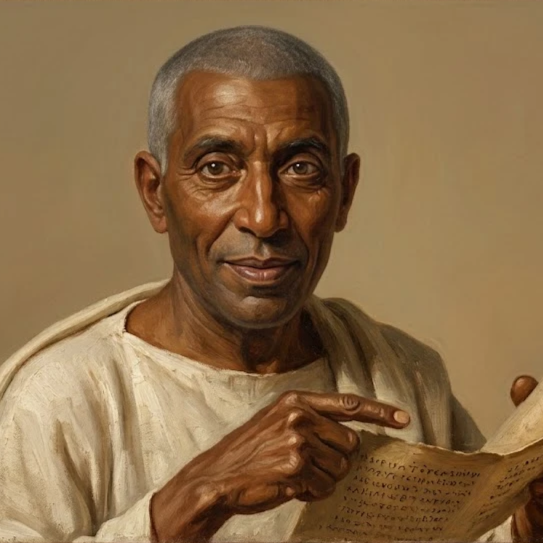
Alexandria had a long tradition of Christian teachers and their pupils. The first name kept is PantaenusPantaenusThe first teacher in this tradition whose name was kept. He taught about 180 to 200.Person, a Stoic philosopher who became a Christian. ClementClementClement was born about 150 and died about 215. He taught in the city from about 180. He left when persecution came under Severus.Person taught in the city from about 180. He praised his last teacher as the true bee. That teacher gathered from the flowers of the prophets and apostles, and left a deathless knowledge in his hearers' souls. Clement gives no name, and EusebiusEusebiusEusebius of Caesarea, about 260 to 339. His Church History is the main source here. He is more reliable when he quotes documents.Person says it was Pantaenus. Origen came after Clement, and Eusebius says he led the teaching of those preparing for baptism from his eighteenth year. Scholars disagree on whether a formal school stood behind these names before Origen's time.
A teacher and a bishop each held real authority, and the two never became one. The teacher's standing came from the wisdom people saw in him. The bishop held an office handed down. In the early 230s, Eusebius tells us, bishops in Palestine ordained Origen, the city's greatest teacher. His own bishop, DemetriusDemetriusHe was bishop of Alexandria for forty-three years, until about 232.Person, had not agreed. He condemned the ordination and the teacher with it. Origen left for CaesareaCaesareaA city on the coast of Roman Palestine. Its site, Qesaria, is in today's Israel. Origen lived and taught here.Place · pleiades.stoa.org and never taught in the city again.
Persecution came more than once. Origen's father was beheaded about 202. Origen himself was jailed and tortured under DeciusDeciusThe persecution of 249 to 251 bears his name. Origen was jailed and tortured in it.Person. The church held two pictures of a life fully formed. One was the martyr's witness unto death. The other was the soul's long climb toward God. About 260, plague struck Alexandria. Bishop Dionysius wrote that most of his people did not run. They nursed the sick, and many caught the sickness and died.
Then the danger came from inside, as brothers argued over the very confession of the Word. AriusAriusHe taught that the Son was the highest creature. The dispute over his teaching ran from about 318 to 381.Person taught that the Son was the highest creature and not fully God. In 325 the council at NicaeaCouncil of NicaeaA meeting of bishops in 325. It answered the teaching of Arius with the word homoousios.Council answered with the word homoousioshomoousiosGreek for of one substance. The council at Nicaea used it to say the Son is fully God. Critics said it is not in Scripture.Term, meaning of one substance with the Father. AthanasiusAthanasiusBorn about 296, he was bishop of Alexandria from 328 to 373. He was exiled five times.Person, bishop from 328 to 373, defended it through five exiles. Later he wrote that the bishops had added nothing new. They had fenced what the churches had received. He also wrote that the Word became human so that people could share God's own life.
After NicaeaNicaeaA Greek city of northwestern Anatolia, now İznik in Turkey. The council of 325 met here.Place · pleiades.stoa.org, the bishop of Alexandria became the guard of the creed across Egypt. His tools were letters, councils and exile. Among those who could read, the long bond between teacher and student was no longer the main way faith was formed.
Later tradition ends the line of teachers with DidymusDidymusDidymus the Blind, about 309 or 313 to about 398. Later tradition says he headed the school. Palladius, Jerome and Socrates do not say so.Person and says he headed the school in its last years. Didymus was blind from the age of four, too young to have learned letters. He died about 398, at eighty-five.
The Nicene creedNicene creedThe statement of faith from the council at Nicaea in 325. It says the Son is of one substance with the Father.Term and the hope of sharing God's life reached Eastern Christianity. So did the habit of reading Scripture with Christ at its center. Origen's work was carried forward too, and people loved it and argued over it.